A good night's sleep
For various reasons I’ve been staying in hotels a lot recently.
Hotels basically have one job - let you have a good night’s sleep in a place that you don’t already have access to a bed (okay maybe they also have a few side ones too; breakfast, dinner, drinks). Some even have a guarantee that you’ll sleep well.
I think there are basically 5 things you need in a room in order to have a good night’s sleep:
- A comfortable bed
- Darkness
- Good noise insulation
- Comfortable temperature
- Air
Weirdly, loads of hotels totally forget about that last one.
No seriously; fresh air
You can think of a room as a big, relatively well-sealed cube. Put some humans inside it and all that breathing steadily converts the oxygen in the room into carbon dioxide. This means, without deliberate intervention (open a window/door, mechanically exchange air with the outside), it will steadily become an uncomfortable, and then potentially lethal environment.
In practice the ‘well sealed’ part of that assumption is only mostly true; as the carbon dioxide concentrations get high enough, diffusion with the outside world mean the air composition reaches a steady state, so you are unlikely to end up in with a lethal amount of CO2.
This is what happens in a surprising number of hotel rooms (as well as most bedrooms in people’s homes).
High CO2 == bad for people
TL;DR of ventilation and CO2 studies is being exposed to high (but still well below lethal) levels of CO2 make people groggy, grumpy and poor decision makers. When measured overnight, it causes a noticable drop in sleep quality with a knock on effect on their ability to think or focus the next day.
It’s worth noting that using an air conditioning unit does not map directly to having good ventilation. A/C will reduce moisture buildup (from people’s breath) and keep the temperature managable so the room doesn’t feel so stuffy, but many types will do nothing to actually exchange air with the outside - leaving the CO2 to keep increasing.
High CO2 is also a measure of rebreathed air, which is a proxy for transmission risk of respiritory illnesses (eg flu, covid), so in shared spaces there is a large secondary benefit beyond “just” feeling less tired.
Observed hotel readings
I own a CO2 monitor1, and have kept it on me when staying in hotels for a while now.
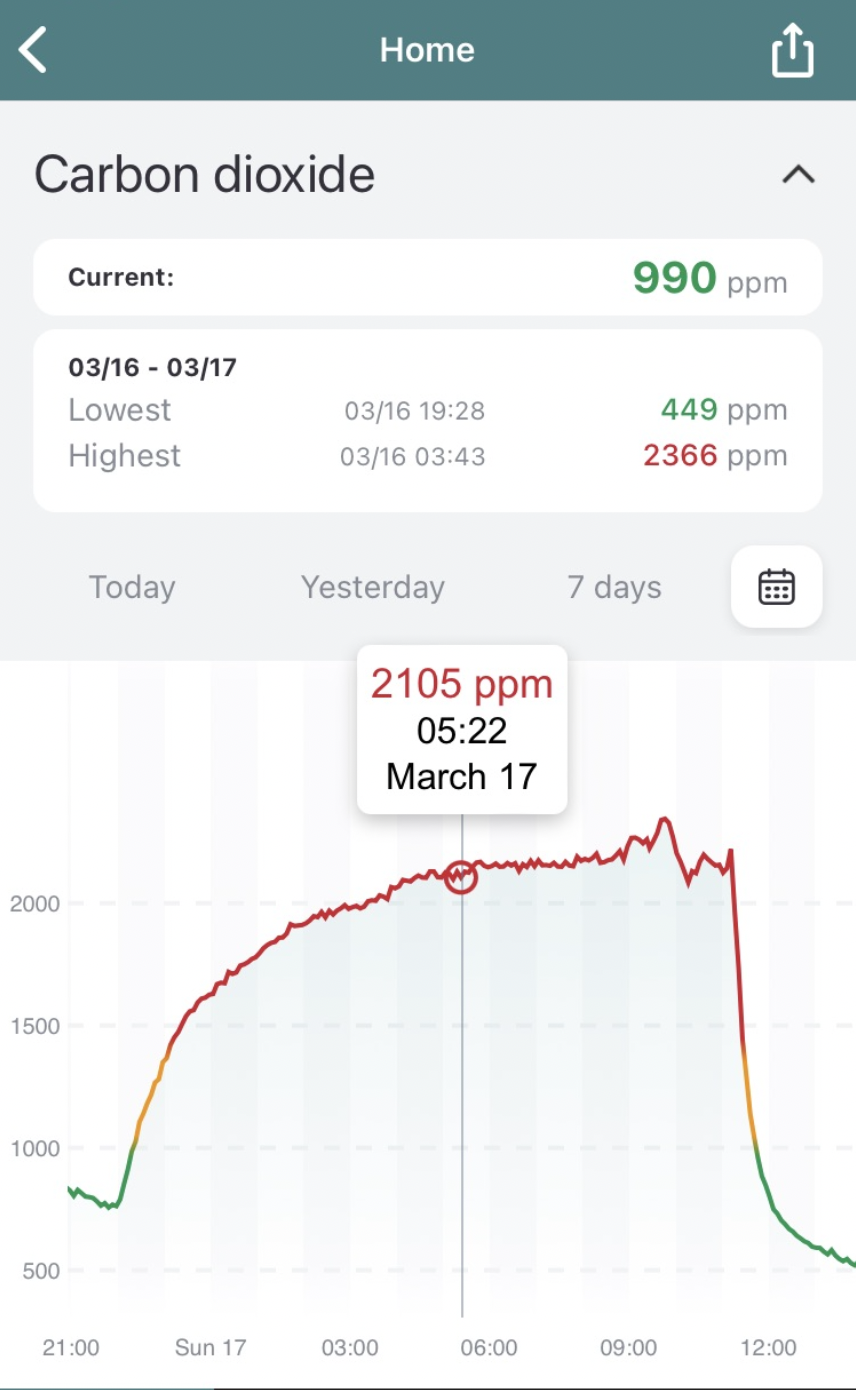
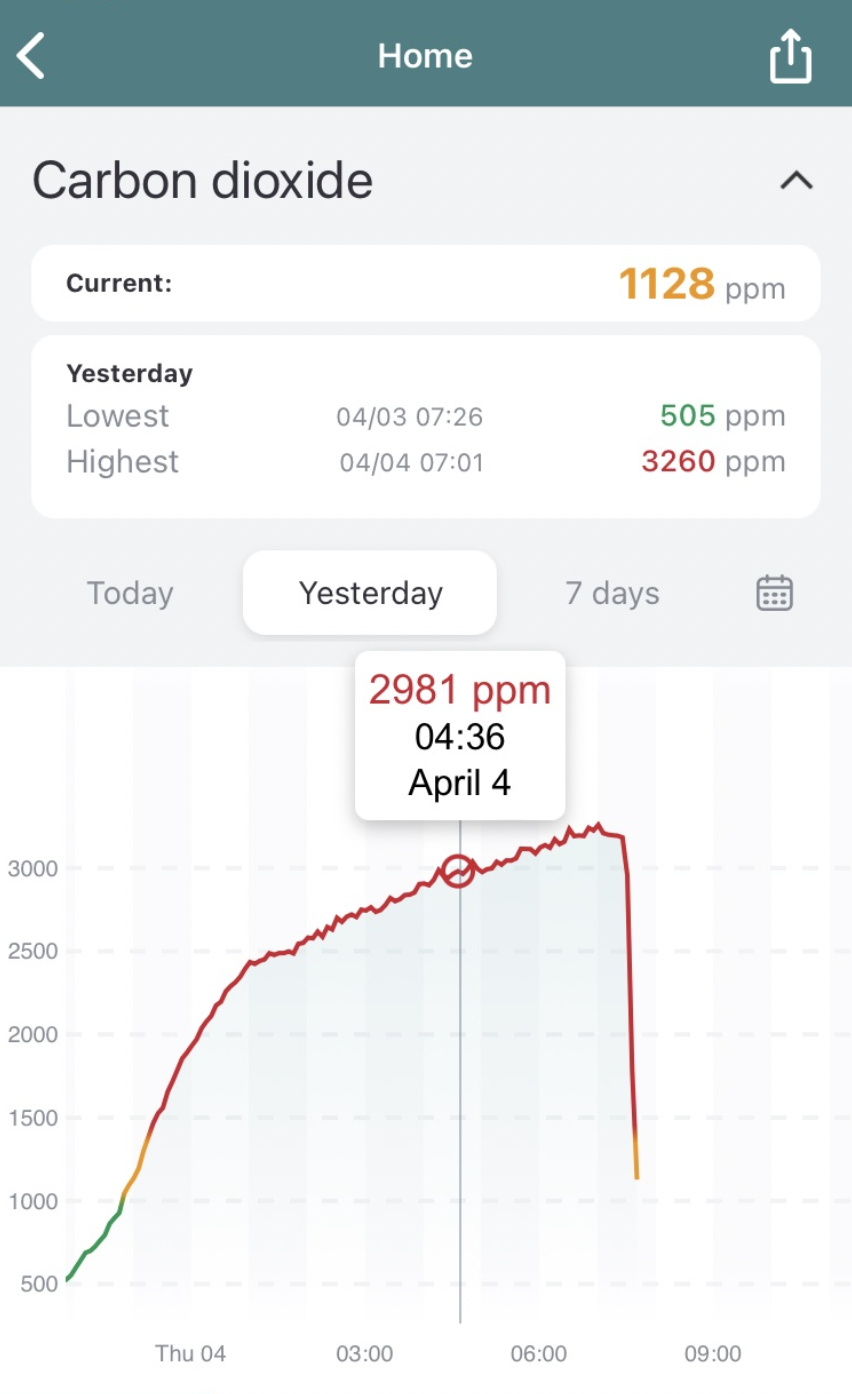
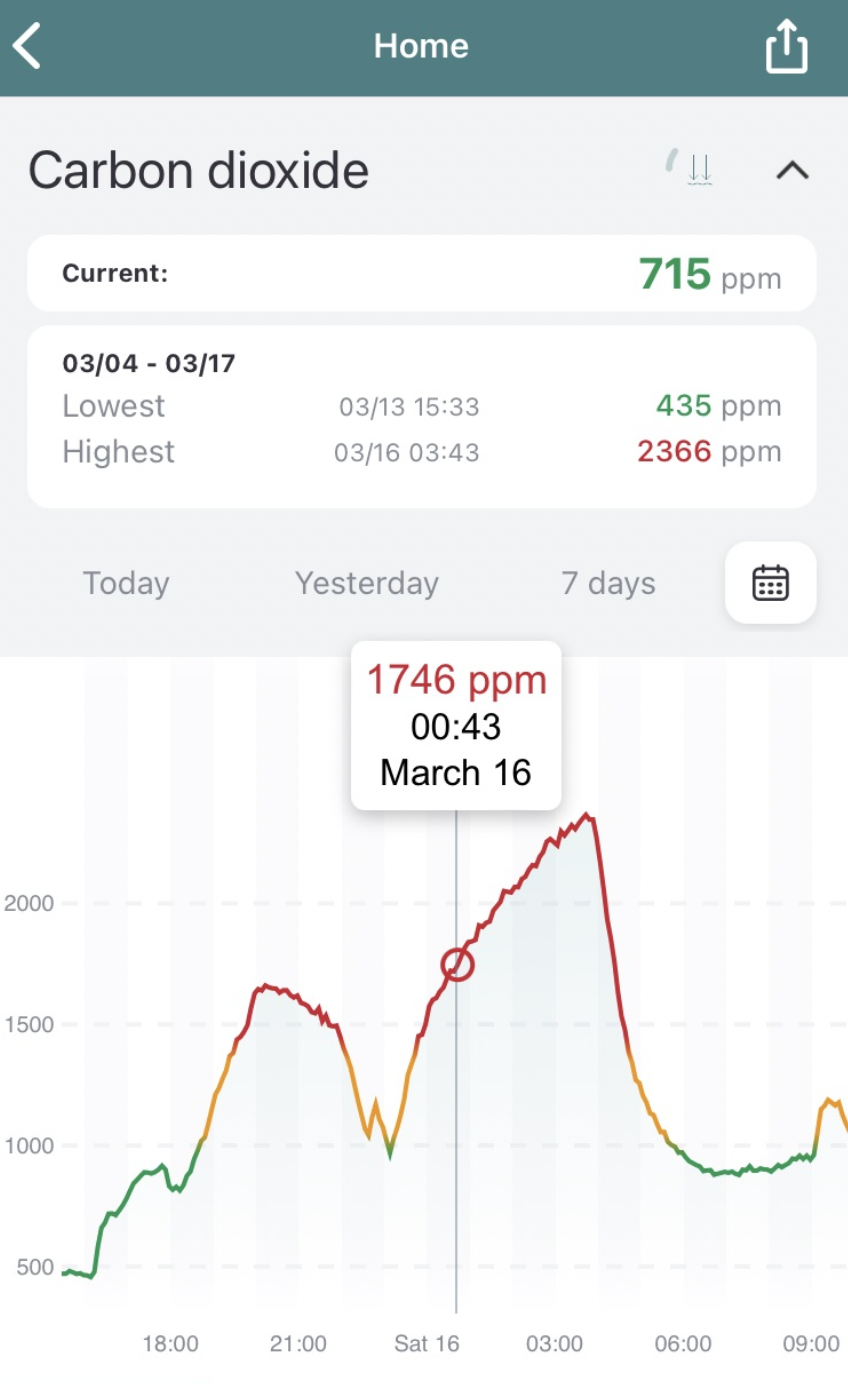
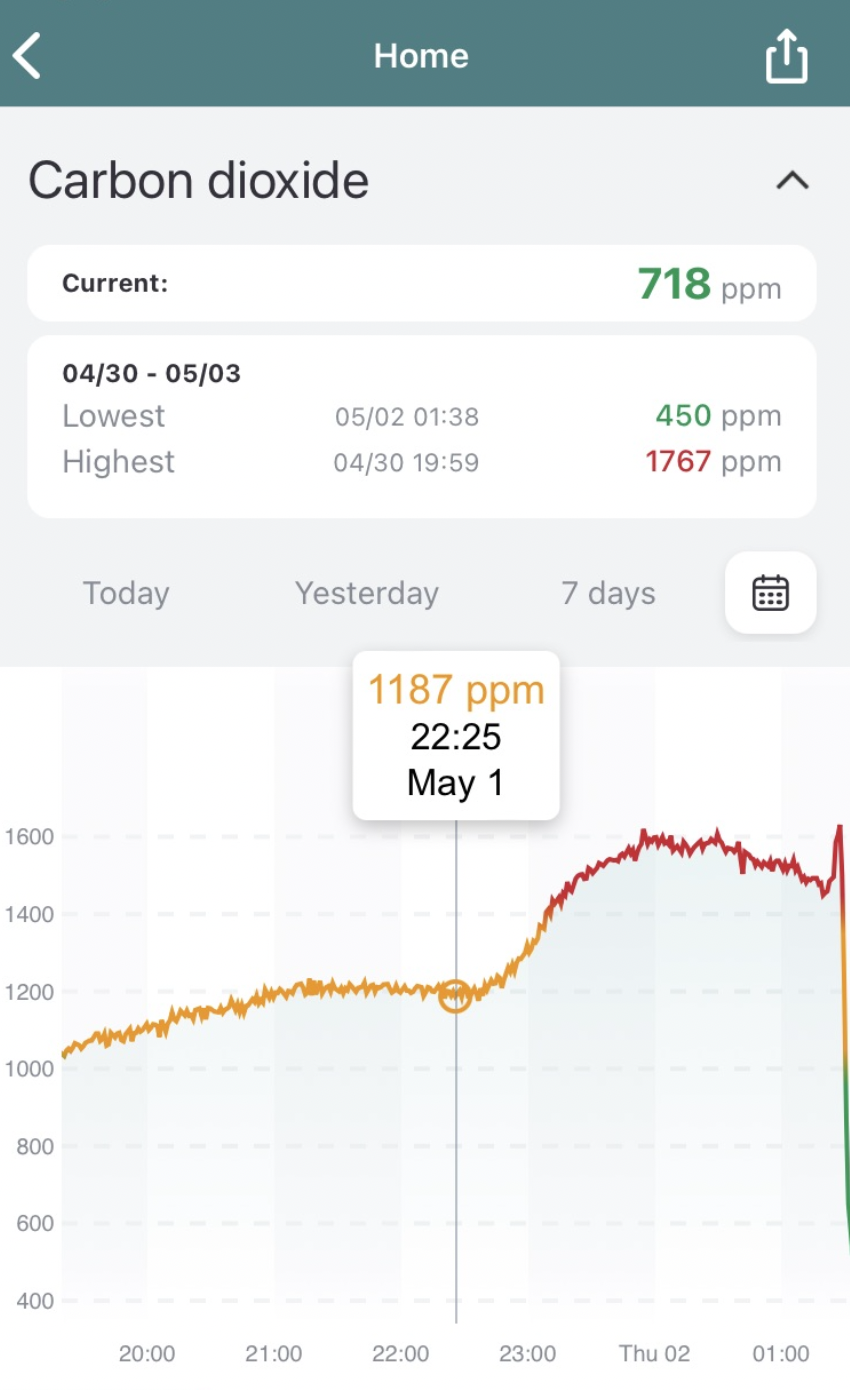
Bearing in mind that atmospheric CO2 is around 420ppm, and the device has a traffic light system where red is triggered at 1400ppm, here are some readings from hotels I’ve stayed in.
Lets start with the bad:
How about the okay ones:
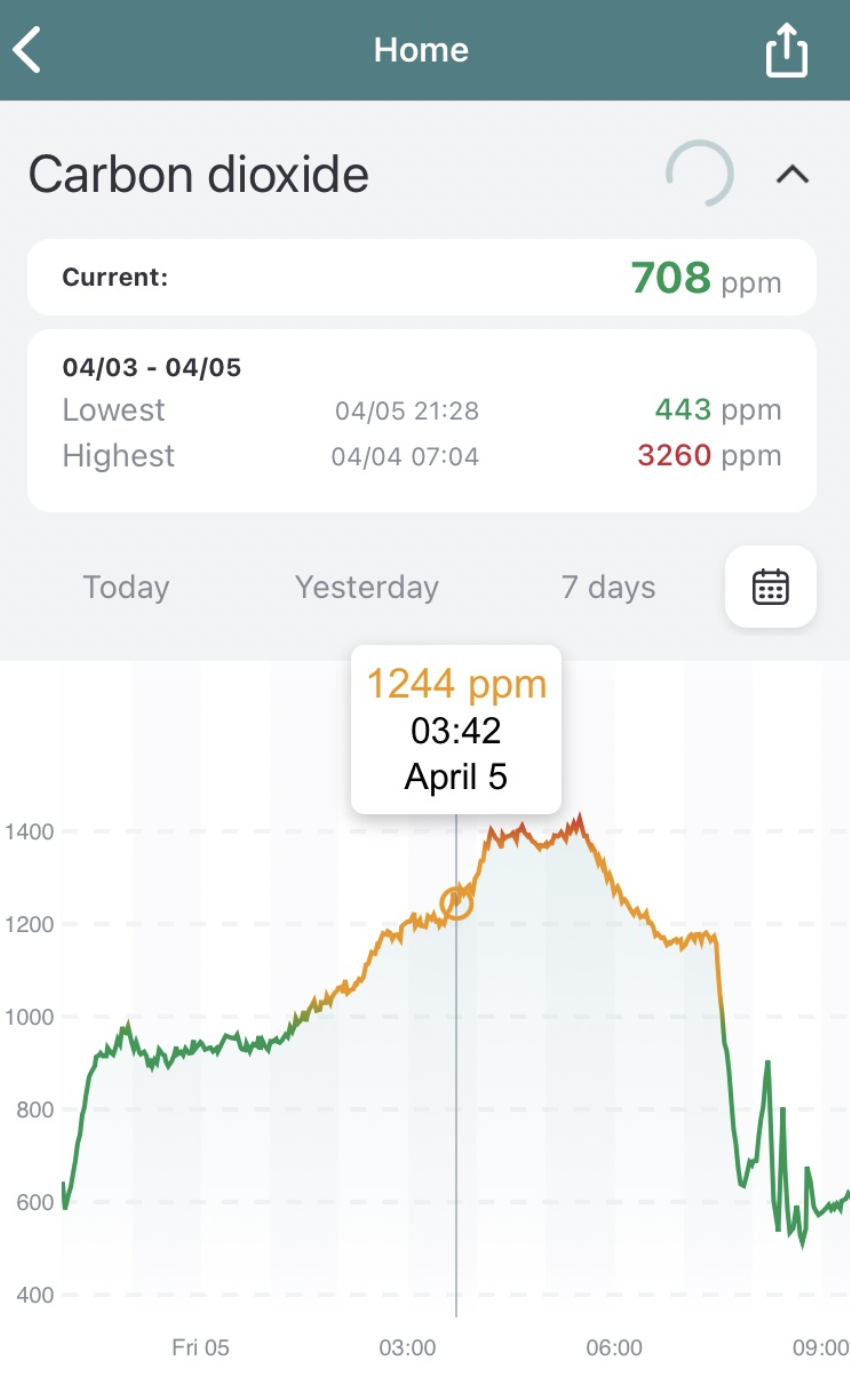
And what I would consider genuinely really great:
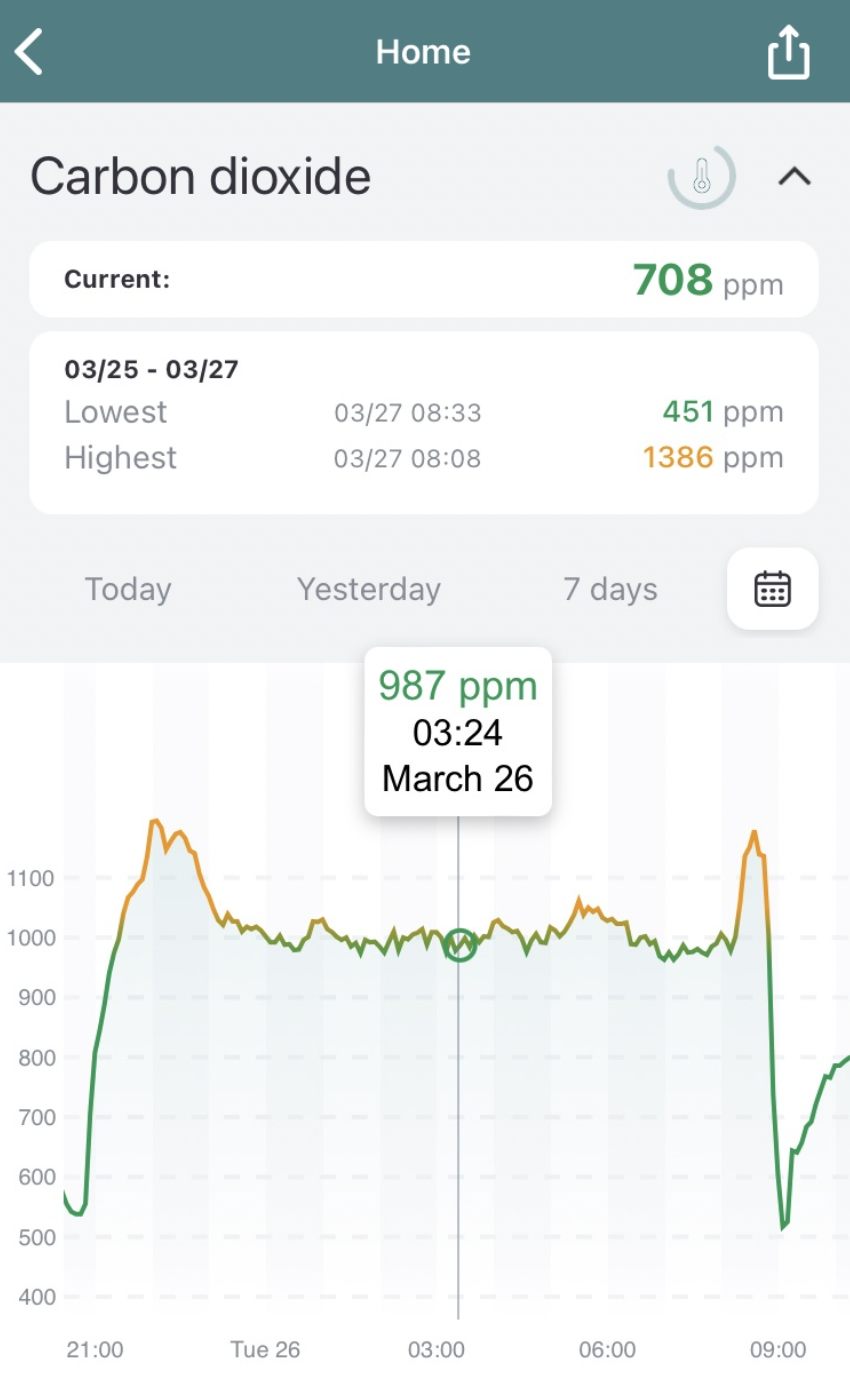
Anecdontally, most (but not all) mornings I’ve woken up feeling groggy and like I had a bad night sleep, the CO2 readings were also very high. There have been a few nights where the CO2 was in the red zone but I didn’t particularly feel like I noticed it in the morning, but they are few and far between.
Why do I feel like a weirdo talking about it?
I find it so strange how little attention is given to this issue. This isn’t only about hotel rooms, but also offices2 and other shared public places (cinemas, theatres, schools, public transport, etc).
From an employer point of view, the return on investment of ensuring the workspace is well ventilated is twofold; employees have more focus and energy, and there is a much reduced risk of spreading illness between staff. From a societal point of view its basically the same thing.
And given that we’ve just lived through respiritory-illness pandemic, how has this not got greater awareness?
There’s so much more depth that I can’t go into for space reasons here (increasing ventilation in houses reduces the buildup of damp and mould; people conflate ventilation and drafts; even in winter buildings can draw air in from the outside without making the inside cold by using a heat exchanger).
The takeaway
On an individual level there is a limited amount you can do about this.
-
Speak to those in charge of your office/school/community center and ask them to ensure the ventilation system draws fresh air in, and get them to open more windows.
-
Try to sleep with a door or a window open whenever you can.
-
Check that if your windows have a trickle vent on them, they are fully open.
-
I’m a nerd and also I wanted to track CO2 levels as a proxy for covid transmission risk when the pandemic was running worse ↩︎
-
A previous employer of mine had office ventilation so bad that it routinely exceeded 1500ppm in the “open” spaces. Meeting rooms at nearly everywhere I’ve worked at have been awful, rocketing past 3000ppm in less than an hour:
↩︎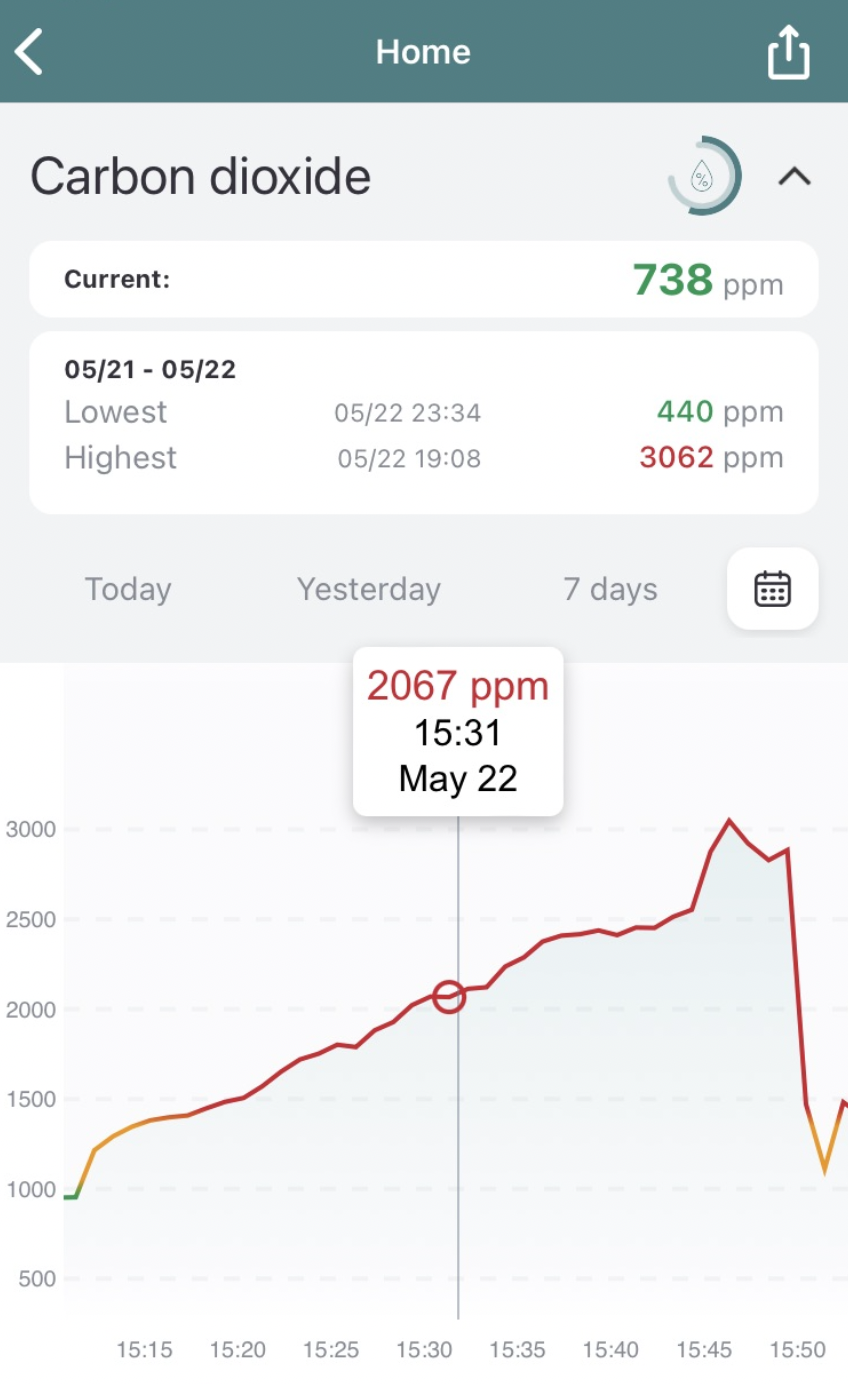
Meeting rooms are tiny and have lots of people. A recipe for awful CO2 levels