Misleading nutrition claims
A misleading midday meal?
Getting lunch in the office isn’t easy if you want to try to keep it vaguely cheap and vaguely healthy. I’m fortunate to be able to add things to a big supermarket order which is delivered to the office a couple of times a week. I settled on different Bol pots because they were tasty enough and seemed to be mainly made of “whole food” ingredients 1.
Separately, as you might be able to tell, I don’t like misleading dark patterns.
How big is a serving?
I find it generally annoying when food producers use a nonsensical measure of “serving” when listing their nutritional values. Per 100g is helpful to reference with other foods, but an actually useful ‘serving’ amount lets you know what you’re actually eating. (e.g pasta or rice giving “per 221g cooked”. I measure it when its dry, pre-cooked, not after!)
A per-pot push
The latest misleading thing I’ve noticed is on the Bol pots I’ve been happily eating. They make big claims about the ingredients (which, to give them credit and as as I mentioned before, are pretty good1) and nutritional content of the pots.
Notice the prominence given to the “per pot” values of this pot. 3 of your 5-a-day! 24g of fibre!
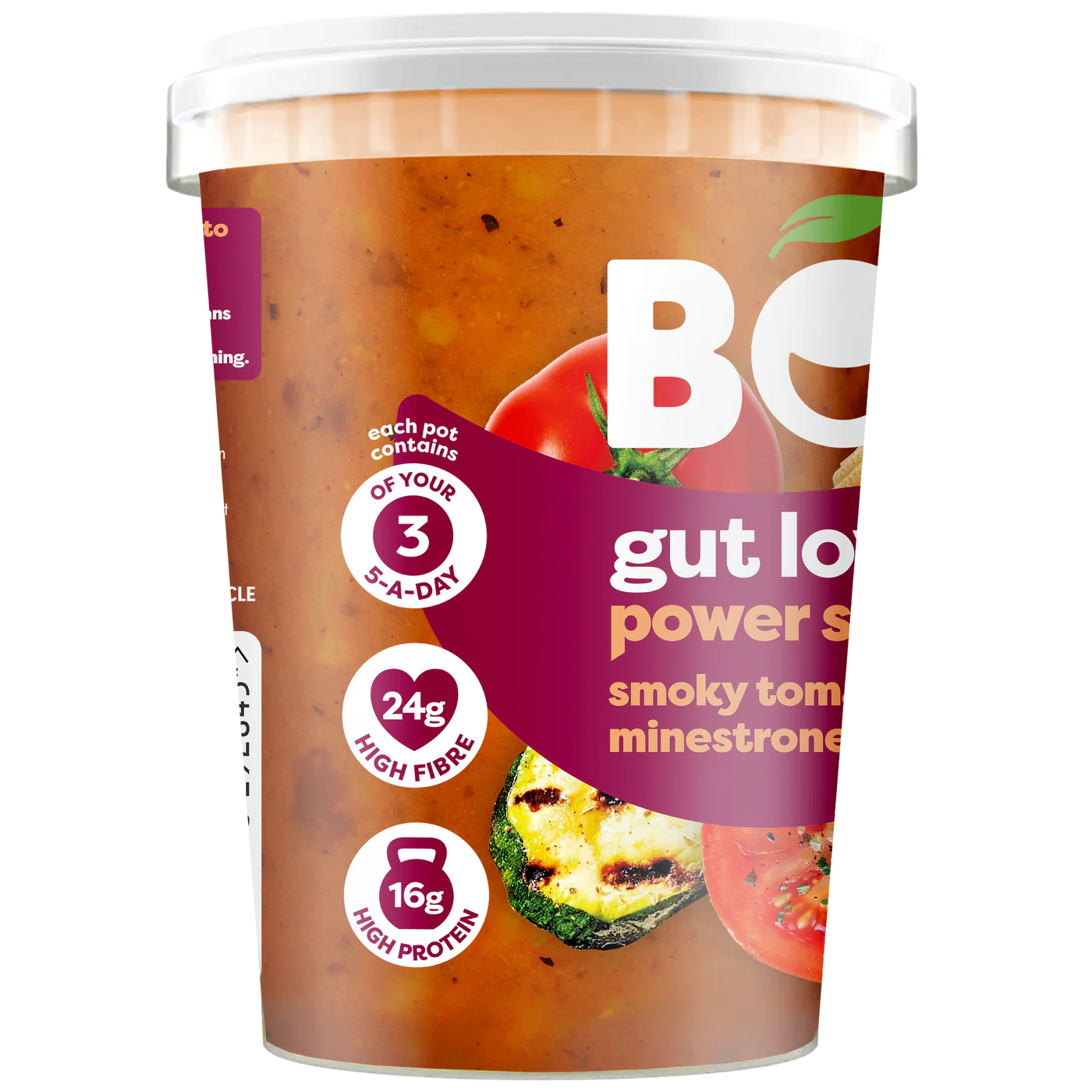
The legal obligations
Food producers are legally obliged to provide nutritional information in standard units (per 100g/100ml)2. In addition, they are given guidance which states:
You may give nutrition information per portion (e.g. half a pizza) and/or per consumption unit (a single unit of food you might take from a packet, e.g. one biscuit or one chicken nugget), as long as this information is given in addition to the mandatory per 100g or per 100ml information.
(source2)
They can also choose to make use of the UK’s “traffic light” nutritional scheme 3 to colour code the values in the table, which Bol have chosen to do. Notice how the second column for the nutritional values per 300g (i.e. half a pot) - not 600g/per pot which would match the claims on the front of the pack.
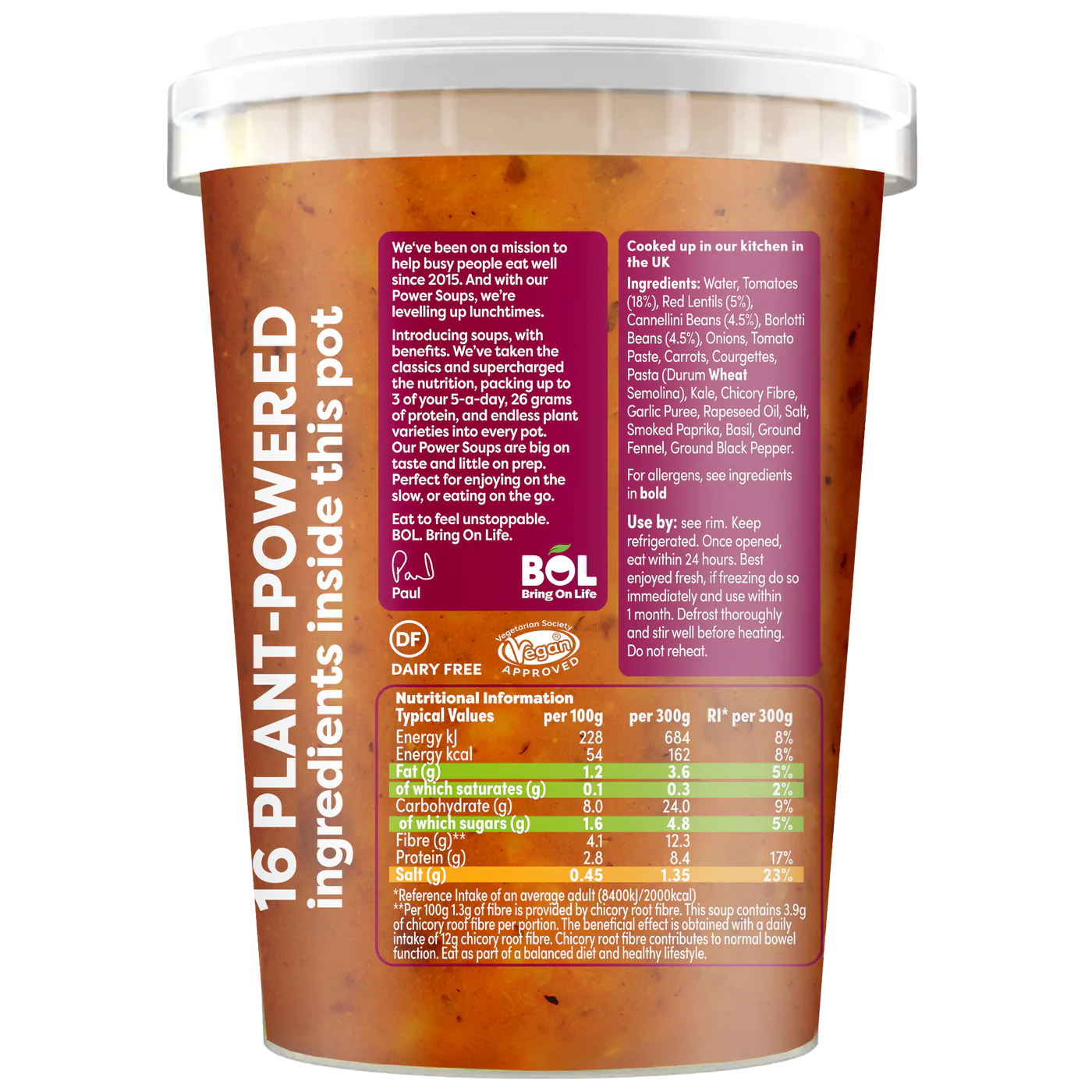
The regulations governing the scheme3 give the following values for working out what colour should be used:
| Text | LOW | MEDIUM | HIGH | |
|---|---|---|---|---|
| Colour code | Green | Amber | Red | Red |
| Fat | ≤ 3.0g/100g | > 3.0g to ≤ 17.5g/100g | > 17.5g/100g | > 21g/portion |
| Saturates | ≤ 1.5g/100g | > 1.5g to ≤ 5.0g/100g | > 5.0g/100g | > 6.0g/portion |
| Total Sugars | ≤ 5.0g/100g | > 5.0g to ≤ 22.5g /100g | > 22.5g/100g | > 27g/portion |
| Salt | ≤ 0.3g/100g | > 0.3g to ≤ 1.5g/100g | >1.5g/100g | >1.8g/portion |
If Bol were to pitch the whole pot as a single serving (which feels reasonable as a microwavable-meal-in-a-pot? And even more reasonable given the nutritional claims being made on a per-pot basis on the front of the pack), it becomes apparent that Bol would have to colour the salt content of the pot as red, because a single pot contains 2.7g of salt - far above the limit that would keep it in amber.
What they should be doing instead
I can’t and won’t make an assertion about why Bol has chosen to make claims on a per-pot basis on the front of the pot, while labelling their nutrition on a half-pot “serving” basis.
But they should pick what a “portion” is, and stick to that both their marketing claims and nutritional ’traffic light’ statements. Either it’s half a pot, or it’s a whole pot.
P.S. In some way, I feel bad for calling out Bol specifically here - I doubt they’re the only company doing this. But at the same time, they are the first one I spotted doing this, and I don’t think I need to an exhaustive search of the market before pointing out misleading claims.
-
Water, Red Lentils (11%), Red Peppers (10%), Chickpeas (6%), Red Pepper Puree, Tomatoes, Carrots, Tomato Paste, Onions, Garlic Purée, Salt, Smoked Paprika, Cornflour, Basil, Rapeseed Oil, Rosemary, Oregano, Black Pepper, Paprika Extract, Dried Red Chillies. Like I said, it looks to be all “whole food"s ↩︎ ↩︎ -
https://www.food.gov.uk/business-guidance/nutrition-labelling ↩︎ ↩︎
-
https://www.gov.uk/government/publications/front-of-pack-nutrition-labelling-guidance ↩︎ ↩︎